
Whether we are aware of it or not, our values lie beneath all our actions, behaviors, and thoughts. Values contain important data for people to know themselves, their lives, the society they live in and the world. A person who can reach the knowledge of his/her values has the power to change and transform his/her actions and behaviors. Institutions and societies that are aware of their values can also have the power to recognize and transform themselves.
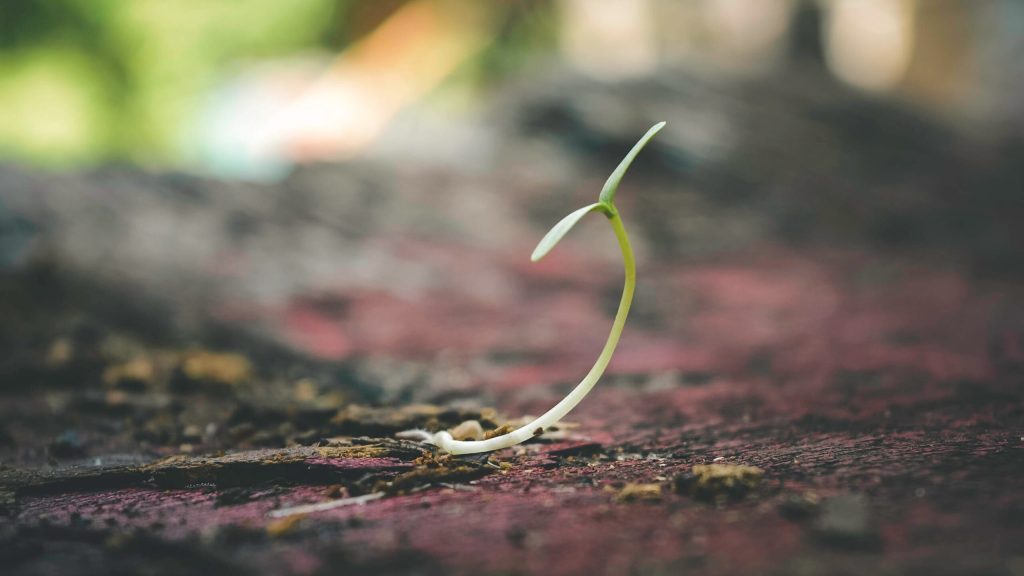
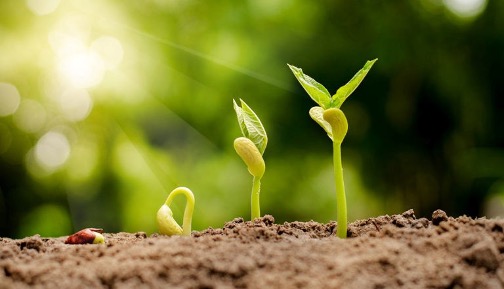
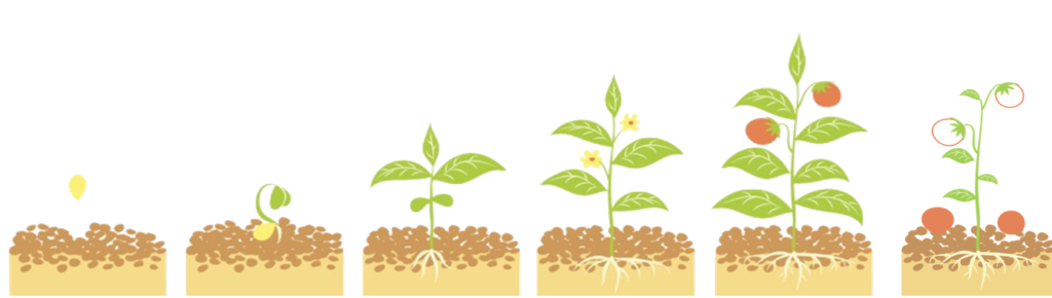
Values are the potentials of human existence. This potential can be likened to a seed. It is in one’s own hands to notice the seed, to make it green and sprout, to turn it into a tree and to make it bear fruit. Human beings can make it happen. Otherwise, just as the seed does not turn into a plan tor a tree and does not bear fruit or flower, human will not be able to fulfill his potential. Efforts must be made to make values visible. Just as it is important to feed the seed in the appropriate soil, with appropriate nutrients and water, and to ensure that it receives enough sun, it is equally important to provide suitable conditions, to make efforts, to secure the values to be experienced.
So, how can we transform the values in our potential into living values? There are many ways to do this. However, the way, sequence and nature of these experiences may be different for everyone.
Awareness
The beginning in this process is the realization that we need to constantly raise our consciousness. When we move forward by keeping our attention and effort in this awareness and reach a consciousness getting everything and everyone as a part of the whole, we begin to perceive values. We realize that we are valuable simply because we exist as human beings.
With this awareness, we begin to see the potential of human beings, that is, universal values such as love, respect and tolerance, which are in the essence of all people, exist like seeds and that these seeds can turn into trees and fruits. In other words, we realize that the potential that exists in all human beings, as well as in ourselves, can be awakened and transformed into expression.
Values such as respect, thought, love and tolerance based on affection, emerge as simple expressions of ‘HUMAN’ potential. (Purifeid Being, HUMAN, Part 3)
At this stage, sincerely asking ourselves questions such as “Have the seeds in me turned into saplings and trees? Which of the values in my potential are embodied in my life, can I keep them all alive?”and having the courage to hear the answer keeps us on a journey of continuous improvement.
The most important clue when looking at whether we live values is our relationships. Because values emerge through relationships. Relationship encompasses our connection with everything; It is an important stage to realize how we relate to ourselves, our environment, nature, the world, and life. Human is a relationship being. Establishing a relationship with our environment and making evaluations is a structural feature of us.
The quality of our relationships affects everything. If we are under the influence of individual (wants, needs, interests, expectations or experiences, memorizations) or social (stereotyped norms, standards, rules, customs, traditions) value judgments, we cannot see the real value of what we relate to. Our evaluations consist of judgments and interpretations. At this level, our actions are reactive and automatic.
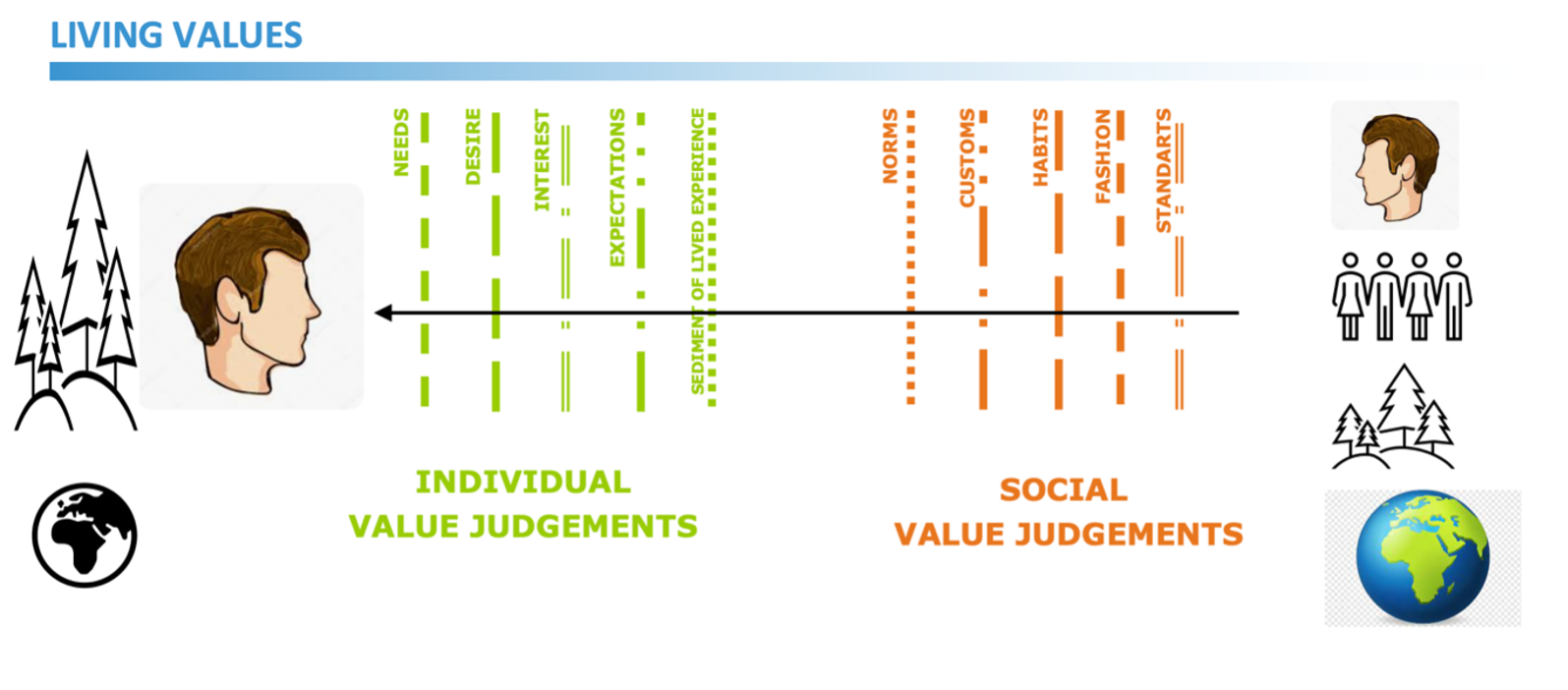
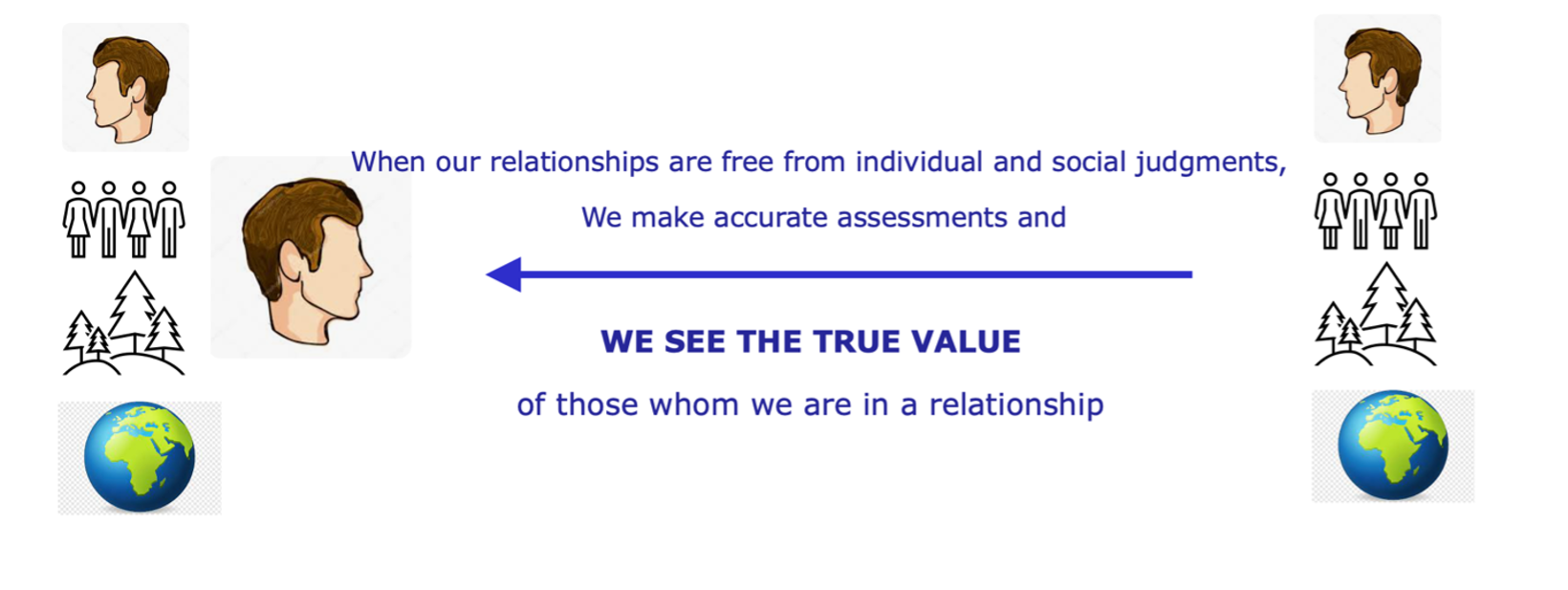
When we become independent of the influence of individual and social value judgments, we see whatever we relate to and evaluate as it is, with its true value. We make accurate assessments and take valuable and independent actions.
Converting Values to Behavior
After the inner awareness of how to live values and how long we can live, it is time to transform them into behavior, into life. This may be the stage where we have the most difficulty. Of course, the seed has a hard time turning into a sapling, then a tree and a fruit, but it still does not give up. Everyone can have their own unique methods to make it easier. As a person gets to know himself, he can find these methods. As we ask ourselves the question ‘How can I put values into practice?’, we can find unique methods. What could some of these be?
First, we can start by ‘pretending that we are living the value love, respect, etc.’.
We can reflect on the definitions and deep meanings of values, and we can focus our attention on this issue.
We can develop awareness of the value from which our every decision, action, and behavior stems. Even if the system behind our behavior is extremely complex, even having an intention about it can help.
We can model the behaviors of exemplary people who have implemented values by observing their life experiences. In childhood, we modeled and used the behaviors we saw in our family and around us without realizing it. When we become adults, we may be able to consciously model exemplary behavior. Living in the Anatolian geography can also provide an advantage in this respect. By taking the example of wise people who have lived or are still living in this geography, we can obtain clues about how to pass them on to our behavior. We can make our own way without losing our originality, not doing the same behavior, but simply noticing one’s approach, the clues about how he lives his values.
Sometimes negative behaviors can also be instructive. Being open to learning and flexible can make our job easier in this regard.
Practicing Continuously and Consistently
Undoubtedly, starting to put values into behavior is an important stage. However, it is extremely important to make it continuous and consistent, and therefore to be a person who lives the values.
When we start to live the values, we reflect them on our environment. This reflection can sometimes be through our actions and behaviors, as well as through our silence and posture. Based on the same example, the seed turned into a tree, bore fruit, and the fruits began to lead to the formation of new seeds and new trees.
What are the issues that we should keep in mind in this process?
Transformation of Values into Lived Values
When transforming values into life, one needs to work on oneself. We must use behavioral models to be able to evaluate ourselves, not others, to see what stage we are at and whether we are progressing.
Behavioral models/life examples of values only give us clues. These can always change and evolve. We should be able to look with flexibility, harmony and tolerance, taking into account that conditions, situations and environments can be different for cultures and individuals, and that they can change at any time. Each situation is unique, we must avoid making generalizations and making definitive judgments.
It is important to pay attention to the intentions and purposes behind behavior and actions. It is necessary to remember that the basis of values is HUMAN. It would be appropriate for us to be careful and aware that even our values can create boundaries, and to always put HUMAN in the focus. The fact that the action is HUMAN-oriented shows that the values are really lived.
As consciousness rises, as our sense of value develops, HUMAN-oriented actions increase.
Judging behavior even if it’s based on a value, can be misleading. From a broader perspective; It is necessary to be able to look at it holistically. It would be appropriate to consider the physical, emotional, intellectual, spiritual dimension of human, that is, his whole being. The life example and behavior pattern of each level of consciousness may be different.
Values are intertwined. It may not be possible to separate them from each other with strict boundaries. For example, expressions of the values of love and respect may be intertwined in an action. In this case, it may be difficult for us to evaluate how these two values are expressed separately.
In order to act with mindful awareness, it is important to be able to focus intention and attention consistently, to be compassionate, tolerant and patient with oneself in this regard, and to strive to transform it into life continuously and consistently despite all kinds of difficulties.
It is necessary to act, be determined and trust the process, knowing that it may take time, perhaps a lifetime, both for values to turn into behavior and to develop awareness of which values are behind behaviors.
Being able to keep values alive and turn them into behavior allows us to serve the whole. It is important that values turn into presence.
Responsibility
At the end of this process, it is possible to transform the potential values into the lived value. The more potential value we can revive and transform into lived value, the more these values can be experienced in the society we live in. Thus, we fulfill our responsibility. This is both our individual and societal responsibility.
“Universal values such as trust, love, respect, tolerance, freedom, peace, justice, and compassion cease to be seen as conceptual knowledge or ideals it will become values that are actually lived.” Manifesto for Humanity, article 50.
The morphogenetic field theory, which was put forward by Rupert Sheldrake and has increasingly being accepted recently, describes the process of “when a number of members of a species that make up a certain critical mass adopt a certain skill, when they change behavior, that skill or behavior turns into a common skill and consciousness in other members of that species, even if they do not have a physical interaction”. Therefore, the change in behavior and consciousness of each member of society and humanity is very valuable. Because each behavioral change is an important step towards achieving critical mass. When the last person to reach critical mass makes that change, the individual behavior change is reflected in the social dimension and becomes a common consciousness.
“Change is individual, its impact is social.”
This is the responsibility of being HUMAN. The responsibility to make the new understanding of humanity understandable and livable by turning universal values into lived values. In a sense, this is an invitation.
“When the flower starts to smell good bees come uninvited.” Ramakrishna
Transformation from Lived Value to Living Value
We can say that the value of human, one’s special place in existence, authenticity, is contribution to the whole with conscious awareness. Although it includes what we know, what we do, what we cannot do, and our behaviors, it is actually our ESSENCE that is beyond them.
It is our greatest responsibility to see our authenticithy, to realize our place and responsibility in the whole, and to reflect the potential values within us by starting to live, by paying attention to even the slightest change in our behaviors and actions, without saying ‘what can I do?’.
When values become a state in me, when they find existence in my behavior, in life, when they turn into consciousness, culture, system, and they become the property of humanity, the subject is no longer me, the subject becomes the value itself. Value becomes a LIVING VALUE.
“Value for HUMAN is the beauty that one creates with every entity that is being integrated in the wholeness in which one has found oneself in. The answer of a being who experiences this to the question “What is your value?” in the world would be” as much as I can serve all other beings, and make them happy.” Purified Being, HUMAN, Part 10.
Tülay EROL,
Common Values Workshop,
The Sun of Humanity Foundation
10 November 2024
RESOURCES:
- Akar, A. (2020). Düşünen Türkçe. Ötüken Yayınları.
- Bilgelik Güneşi Derneği (BGD) ve İnsanlık Güneşi Vakfı (İGV)’nın ortak projesi olanİnsanlık Üniversitesi Kütüphanesi ve arşivinden yararlanılmıştır.
- Dalai, L. (2001). Yeni Binyılın Değerleri. Dharma Yayınları.
- https://www.scientificamerican.com/blog/cross-check/scientific-heretic-rupert-sheldrake-on-morphic-fields-psychic-dogs-and-other-mysteries/
- İnsanlık Güneşi Vakfı. İnsanlık Manifestosu https://www.insanlikuniversitesi.org.tr/insanlikmanifestosu/
- İnsanlık Güneşi Vakfı. Kurumsal Yol Haritası ve Değerleri Kitapçığı (yayınlanmamış eser)
- İnsanlık Güneşi Vakfı. (2023). Arınmış Varlık İNSAN. İnsanlık Üniversitesi Yayınları.
- Kuçuradi, İ. (2018). Etik. Türkiye Felsefe Kurumu Yayınları.
- Kuçuradi, İ. (2019). İnsanca Yaşayabilmenin Nesnel ve Öznel Koşulları Üzerine. İzmir Barosu Dergisi. s:461-468.
- Kuçuradi, İ. (2019). Uludağ Konuşmaları. Türkiye Felsefe Kurumu Yayınları.
- Kuçuradi, İ. (2020). İnsan ve Değerleri. Türkiye Felsefe Kurumu Yayınları.
- Living Values A Guidebook. (1995). Publication of the Brahma Kumaris World Spiritual University.
- Takıyettin, M. (1988). İnsan Felsefesi. Remzi Kitabevi.