
The world and humanity are preparing for an extraordinary transformation. A transformation of the beliefs and ways of thinking, the mentality and understanding that have dominated for centuries. This is a shift towards a new way of thinking, a completely new mentality.
“Learn to see. You will realize that everything is interconnected.” Leonardo Da Vinci
As humans learn to see, or in other words, as their consciousness evolves, they begin to recognize the totality of their being, discovering their relationship and connection with the universe and everything that exists. The unity of being is not actually new to the spiritual world. Now, scientists are also preparing to accept the rising wave of a consciousness orientation that will transform the world. In the scientific world, interconnectedness is beginning to be revealed, articulated, and accepted. However, especially following the scientific discoveries of the 20th century, many exciting new researches, discoveries, and developments are taking place regarding the brain and heart, which are important facets of interconnectedness.
At the beginning of this journey of discovery, in the first half of the last century, studies aimed at understanding the functioning of the brain were concentrated in the field of medicine, and especially in the fields of neuroanatomy , neurology, and neurosurgery. From the second half of the century onwards, very important scientific discoveries revealed how communication between nerve cells works and its contribution to the thought system.
With the invention of functional MRI (magnetic resonance imaging) in 2003, one of the popular imaging methods of recent years, the observation of structures called connectomes ( neuro-mind ) became possible, and with the support of advanced computer technologies, a different perspective began to develop in the field of neurology. Projects focusing on the exploration of the brain, mind, and artificial intelligence (Human Connectome Project in the USA, Human Brain Project in the EU) began to emerge one after another around the world.
Although significant progress has been made in neuroscience studies regarding the functioning of the brain, there is still a long way to go. Considering that working solely in the field of neuroscience might create limitations and remain within a fragmented perspective in understanding the mind, the brain’s working system, and its connectivity, collaborations have emerged in various platforms and in increasing numbers in recent years. Scientists working in many different fields such as sociology, history, anthropology, mathematics, physics, information technology, computer engineering, molecular biology, biology, psychiatry, neurology, physiology, anatomy, psychology, etc., have begun to work together to create a more holistic perspective. With the development of these multidisciplinary studies, many new disciplines and independent research areas with the prefix ‘neuro’ have emerged; they have created independent research fields by taking on new names such as neurolaw, neurohistory , neuroethics , neurophilosophy , neuroeconomics , and neuromarketing (1).
Interpersonal Neurobiology (IPN)
Interpersonal neurobiology was first articulated in 1991 by neuropsychiatrist Dr. Daniel J. Siegel.
Interpersonal neurobiology works with disciplines such as anthropology, biology, cognitive science, computer science, developmental psychopathology, linguistics, neuroscience, mathematics, physics, psychiatry, psychology, sociology, and systems theory (2). In fact, it investigates how we connect throughout our lives, how we grow, and how we form bonds with others. According to these studies, the brain is a social and cultural organ and stretches and takes shape depending on experience ( neuroplasticity ). Therefore, there is neither an individual neuron nor an individual human being in nature (3).
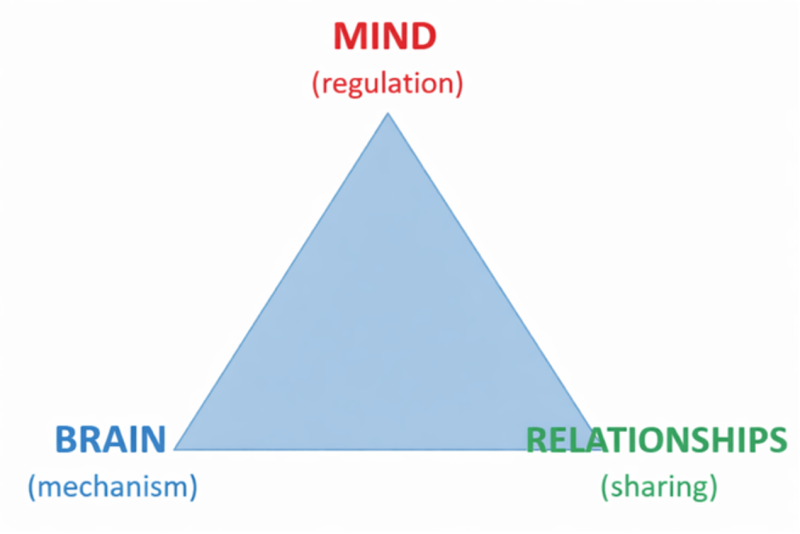
Interpersonal neurobiology speaks of a well-being and health triangle formed between the brain, mind, and relationships (3). Before discussing this, it would be appropriate to define the mind.
Mind
Dr. Siegel and colleagues define the mind as the process that regulates the flow of energy and information. The mind is not confined to the skull and is actually embodied throughout the entire body (4). It has a highly unique and interconnected structure in all individuals. It is interconnected both between its own cells and between individuals. The flow of energy and information that began while writing these lines continues while reading, and inter-mind communication and shared experience begins, a collective flow takes place.
Another definition of the mind is that it is a model formed by the neural network in the brain. Dr. Türker Kılıç defines the brain as the organ that produces the mind, and the neuromind or connectome , as the interface between the mind and the brain, consisting of electrochemical information streams in the brain. Connectomes are networks of connections with common functions, consisting of 200-300 million neurons, and have become visible with fMRI (5).
Interpersonal neurobiology speaks of a triangle of well-being in which humans exist in balance. The triangle of well-being is described as three directions of the flow of information and energy, that is, three different faces of the same reality. The mind organizes itself using the brain and relationships. Humans shape their brains through the power of their relationships with everything else. This approach reveals that we are connected to other people for our minds to be healthy and active, and that this connection is important. Our experiences and environment shape synapses; networks that are used become stronger, while those that are not used disappear over time. The elastic structure in the brain is constantly changing. If there is no interaction, neurons die after a while (apoptosis), and people become depressed in this state (2). This interaction occurs through synapses.
A synapse is a gap that connects neurons. There is a continuous electrochemical transmission between these gaps. In fact, the building block in communication between humans is the same and is called a social synapse (3).
Social synapses are the shared space between us and other people; they are visual, tactile, and auditory communication. They are everything we express through electrochemical and mechanical signals, our gaze, body language, tone of voice, facial expressions, and words. In a study conducted in 1992, Brothers stated that one of the most important sources of information in the world is the human face (6). Our feelings and thoughts are reflected on our faces, and we convey what we experience to people through our smiles and narrowed eyes.
the social synapse, that is, our connection with each other and the vital importance of this connection, is observed in a newborn baby. The most important factor in the baby’s brain development is the first communication it establishes. This is called the first social synapse, the first conversation (6). This first communication pattern established between mother and baby is very valuable. Because it both creates a secure attachment and supports the baby’s brain development, enabling it to learn self-regulation (7). In the first years of life, babies under stress need their primary caregiver to be with them to relax and feel safe. They need their touch, their smile, and to be spoken to in a calming voice. The healthy formation of this relationship positively supports the development of the orbitofrontal cortex (which we will define as the watchtower ), the brain’s top control center, and the intelligent vagus nerve in the baby (6).
Mirror and Resonance System
When it comes to interpersonal connectivity and our social connections, it’s appropriate to mention mirror neurons, our socio -cultural neurons, and spindle neurons, a more recent discovery. The mirror neuron system, besides enabling us to sense another person’s emotions and empathize, also allows us to model and imitate behavior we observe. Daniel Goleman notes that these nerve cells, particularly concentrated in the limbic system, serve not only to imitate actions but also to sense another’s intentions, extract social meanings from their actions, and read emotions. In this way, they help us adapt and follow events by allowing the feelings we witness to pass through us. In a sense, they build bridges.
Spindle neurons, a more recent discovery than mirror neurons, are giant neurons observed in the brain and are therefore four times faster (6). Spindle neurons form particularly thick connections between the orbitofrontal cortex and the limbic system and play an active role in our understanding of social intuition and connection (6, 10).
Integration
For a healthy social bonding system to exist, the completion of integration is important for the healthy development of the frontal cortex, which supports our self-regulation and self-monitoring mechanisms. Integration is the differentiation and interconnection of the elements of a system. It is very valuable in developing the concept of “self” and enabling self-regulation. Integration forms the heart of both individual and relational health (8).
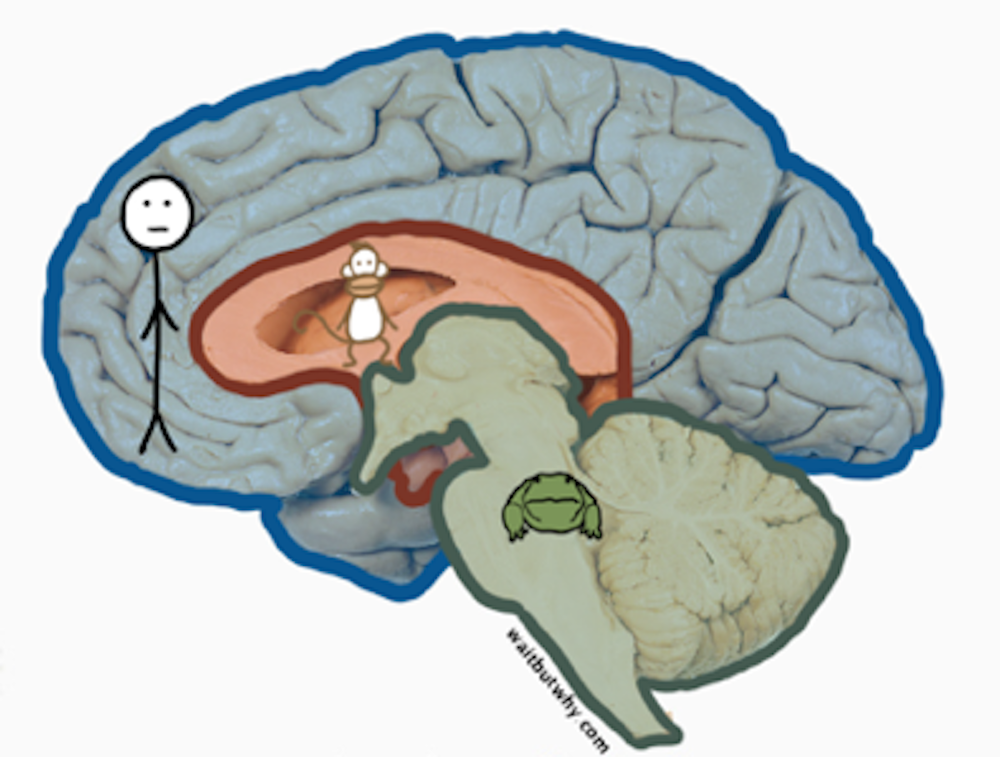 |
Brain development begins in the womb and proceeds from bottom to top. The brain develops in layers within the uterus. The most primitive and oldest part, the part that is active when we are born, is the REPTILE BRAIN , which is also found in ancient animals . It is located in the brainstem and is responsible for everything in the body, such as the management of all parts of body physiology, such as breathing, eating , thirst, hormonal balance, homeostasis (state of bodily balance), our perception of security and threat and our response to it (freezing reaction) (9). This brain records every moment of life.
Above the reptilian brain, the LIMBIC SYSTEM develops. The limbic system (mammalian brain) is shaped by the newborn’s genetic makeup, innate temperament, and lived experiences. As Bruce Perry stated when defining neuroplasticity , the brain is shaped by its usage; “neurons that fire together connect together”. The reptilian brain and limbic system together are also called the EMOTIONAL BRAIN. This system is located at the heart of the central nervous system and its function is to look after our well-being. It forms the most important mechanisms for making decisions for our survival, such as the fight-or-flight response (9). It also includes the emotions, learning, and memory systems.
The NEOCORTEX is the part of the brain that emerged most recently in evolutionary terms and is also the last to develop in humans . Although this part of the brain exists in other mammals, it is very underdeveloped. It begins to develop from the second year of life and, especially with the development of the prefrontal lobe, possesses high cognitive functions such as understanding, interpreting, analyzing and synthesizing the world, planning, creativity, visualizing through imagination, and empathy. The prefrontal cortex acts like a “watchtower” (9), enabling us to perform self-observation and self-regulation. This region collects, balances, and coordinates all the signals of the three brains (8).
Daniel Siegel explains integration using a hand model. He says that if we place our thumb in the center of our palm and bring our fingers together at the top, we get a tangible model of the brain. Our fist represents the spinal cord, which extends from the spine where the brain sits. If we raise our fingers and hold our thumb upright, the inner brainstem (reptilian brain) is represented in the palm. When we put our thumb back down, this is the limbic region (emotional brain). When we curl the other fingers and place them on top, it represents our cortex.
 |
This model illustrates the importance of using our entire brain. Indeed, our response to an experience evolves from the most recent to the oldest. If we develop the habit of using our whole brain and our nervous system is balanced, we will primarily respond to an event through social interaction; we will establish connection by developing feelings such as empathy and compassion , calmly using a soothing tone of voice, and making eye contact. However, if a more serious threat is perceived, if the autonomic nervous system is unstable, or if we are under intense stress, we can easily activate a fight-or-flight response or even a freeze response.
Our autonomic nervous system regulates our body’s internal rhythm, or physiology, and also regulates our response to stressful situations based on our perception of safety and threat.
Autonomic Nervous System and Multiple Vagus Nerves Polyvagal Theory (Theory) Effects of Social Participation on Our System
The autonomic nervous system is a holistic part of the human nervous system (11). While it is an autonomous structure, it is actually a system that allows intervention by the conscious mind (10). This system was previously thought to be a two-winged structure (Sympathetic System and Parasympathetic System) that worked in opposition to each other. Thanks to the Multiple Vagus Theory, which Stephen Porges put forward as a result of his work in 1994, it was observed that it actually has a three-tiered hierarchical structure that develops by encompassing each other (12).
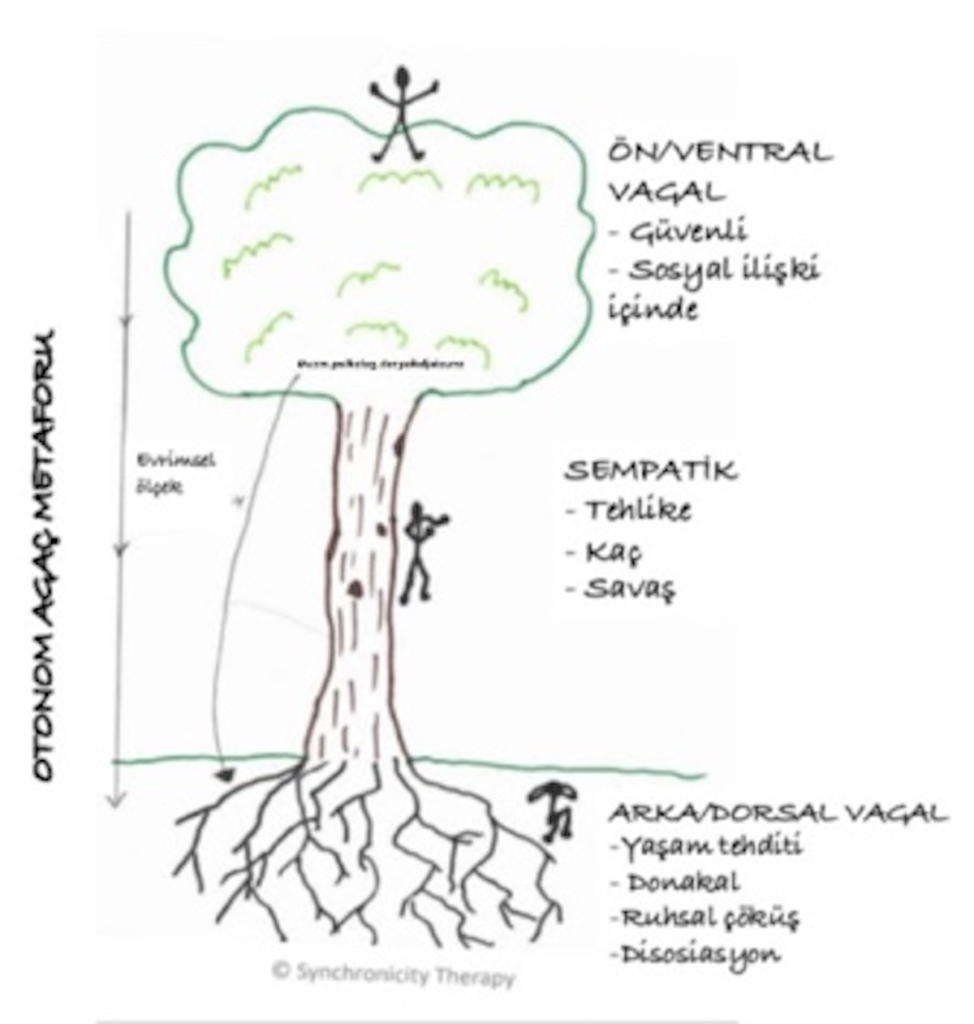 |
The autonomous system’s response to the three-tiered hierarchical social participation system:
- Body shutdown or freezing reaction: This is a reaction common to all reptiles. In times of life-threatening danger, the body becomes frozen, and almost all vital functions cease.
- The fight-or-flight response: A reaction that arises from the development of the sympathetic system in mammals. It is a state experienced in an aggressive or defensive mood, associating past experiences with the present, feeling detached and disconnected, and open to personal perception.
- Social Interaction mode: This is the only response that allows for open, non-judgmental, kind behavior and a heart-eye connection, feeling connected to everything else. It is the mode in which the frontal lobe and the watchtower are actively working, allowing for self-regulation and self-observation, thus establishing a genuine connection. It involves the intelligent vagus nerve ( ventral lobe) , the last evolutionarily developed part of the parasympathetic system. This can be experienced through the development of the vagus nerve.
Vagus Nerve:
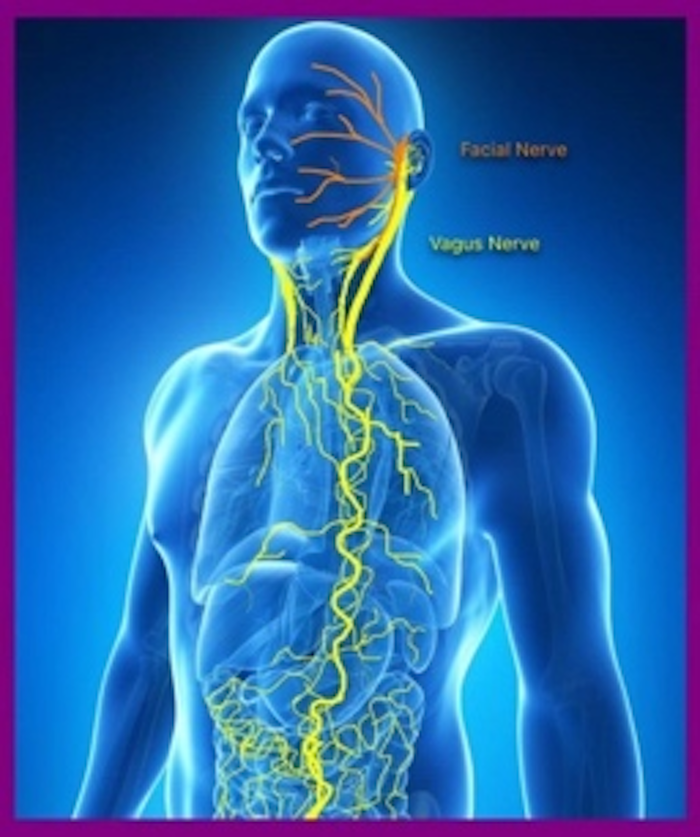
The vagus nerve is one of the most important points in the connection between the heart and the brain, carrying the wisdom of the body to the brain . It is the backbone of the social connection system. It is responsible for physiological and psychological relaxation. Research on the vagus nerve, whose name literally means “traveler,” dates back to Galen’s observations on gladiators during the Roman Empire (11). Indeed, it travels throughout the entire body like a traveler. Although it is called the vagus nerve, it actually functions as a two-way feedback system, more than just a nerve. Vagus nerve fibers control the functioning of many internal organs such as the heart, lungs, liver, kidneys, and intestines, and also interact with brain functions. Approximately 75 percent of all parasympathetic system nerve fibers travel within the vagus nerve and are distributed to the chest and abdominal regions (13).
vagus nerve, which evolved later, goes to the heart, facial muscles, palate, vocal cords, and ear, and plays an active role in calm, social communication. 85-90% of the fibers going to the cardiovascular system carry signals from the heart to the brain (14). With the stimulation of the vagus nerve , the system receives ‘relax, rest and rejuvenate’ signals. Measuring heart rate variability is the simplest method of evaluating the strength of the vagus nerve ( Vagal Tone ) (15).
 |
Barbara L. Fredrichson “ Vagal tone” is described as a biological capacity for love. High vagal tone signifies health and connectedness, both physically, mentally, and socially. The vagus nerve is what we are aware of . without together that we are person with link establishes And at the moment experience coordinate It does . Our awareness completely outside One in a way to the eyes warning leaves, eyes surroundings, facial expressions And on the face -most Small till much all our muscles loosens, on our faces smile spreads, middle in the ear minuscule muscle warns and opposite side to your voice more we become sensitive. Meanwhile system other sounds pushes it to the background, out of our hearts oxytocin secretion. It starts, our voice resonates , softens . And It becomes melodic . Same in time our pulse our breathing calms down deepens And all Our bodies also relax . This state around us with everything And with the whole in connection of being is a sign (15).
Barbara L. Fredrichson states that eye contact is the trigger for a state of togetherness and connection, and is our most fundamental sensory connection, and that eye contact is the key to unlocking the wisdom of intuition (15). When our gazes meet, the person opposite us is also here within us. The connection between the heart, the eye, and the brain is established through the activation of the vagus nerve.
THE CONNECTIVITY OF THE HEART
Just as the body possesses wisdom, so too does the land we live on; it is passed down from generation to generation . As in the verses of Neşet Ertaş, one of the many bards who put Anatolian wisdom into words, ” a path stretches from heart to heart,” invisible to the eye but felt deeply.
Indeed, the East In its culture, ” heart-soul ” always A lot important dead And none once languages It hasn’t fallen . Different . different with words different meanings loading And more rich One meaning what you won One It is a sign .
Until now, the interconnectedness of hearts and the role of the heart, which was mostly expressed in the wisdom and ancient teachings of these peoples, has recently begun to be brought to light through ongoing scientific research.
by the Heart Math Institute ( Hearthmath ) over 30 years, the heart and brain are in constant two-way communication. This communication is controlled by the autonomic nervous system (ANS). In this communication, the amount of signals sent by the heart and cardiovascular system to the brain is greater than that sent by the brain. The signals from the heart to the brain not only have a regulatory effect on the ANS, hormones, and organs, but also reach the higher control layers of the brain, such as the thalamus , hypothalamus, amygdala , and frontal cortex, playing a significant and direct role in the formation of human “perception, thought processes, and emotional experiences” (16). The heart has its own unique nervous system consisting of over 40,000 neurons. The heart interacts with both the brain and the body through multiple systems (14,16).
- Neurological Communication System: The INTELLIGENT VAGUS sends signals via the ONS to the brain and body, such as relax, calm down, rest, rejuvenate, and digest.
- Biophysiological Communication System: PRESSURE WAVES, or the pressure waves that we define as pulse, which develop in connection with the heartbeat, synchronize all the body’s cells and neurons. The heart is the organ that creates the most powerful rhythmic information network in the body. Information transfer from the heart to the holographic field occurs via pressure waves.
- Biochemical Communication System: Hormones secreted from the heart communicate with the entire body through the release of all hormones, primarily oxytocin.
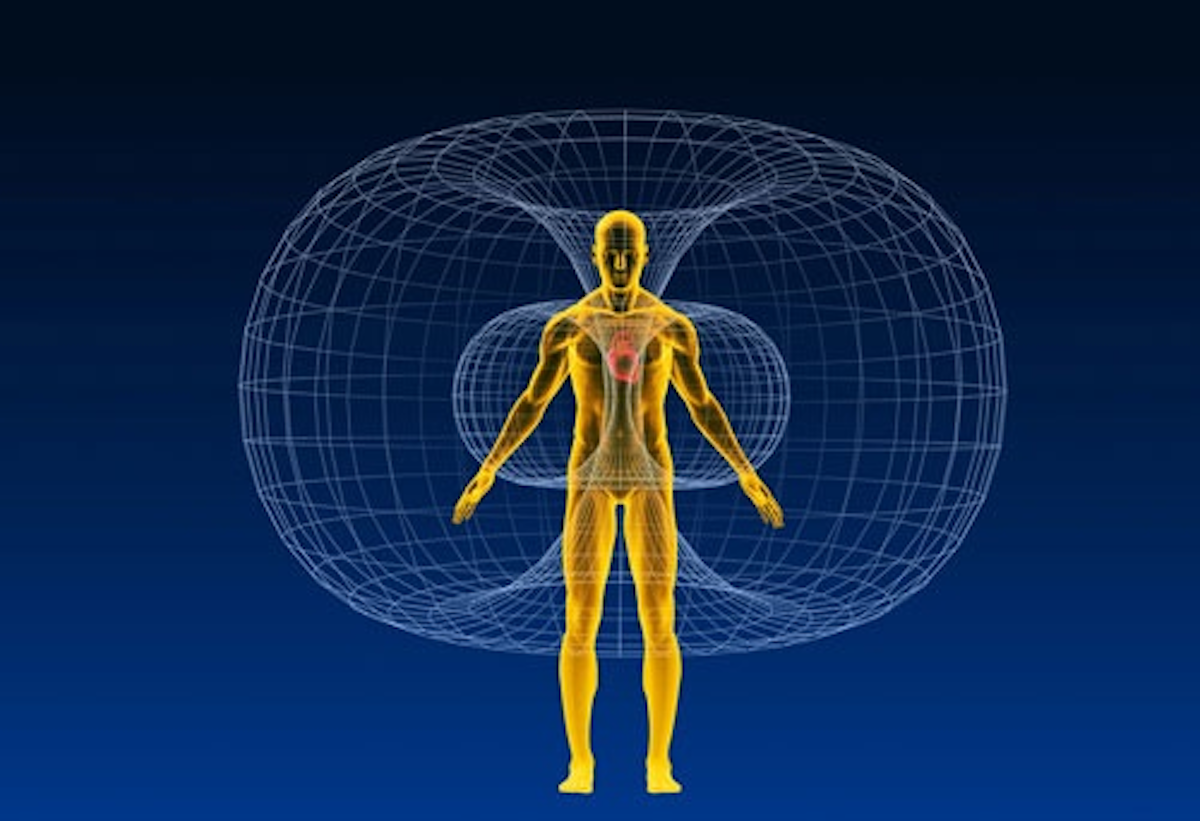
- The Heart’s Electromagnetic Field : Associated with the INTUITIVE HEART. While the heart’s electrical activity is 100 times greater than the brain’s, its electromagnetic field is 5000 times greater and approximately 5 meters wide.
Heart intelligence is a higher level of intelligence that supports mental, physical, and emotional well-being. Through the intentional and conscious use of this intelligence, ” heart harmony ” is achieved . Coherence can be easily created. A harmonious heart affects the heart itself, the brain, and the whole body, bringing them to a level of resonance and can produce a ‘mind with a heart’ (16).
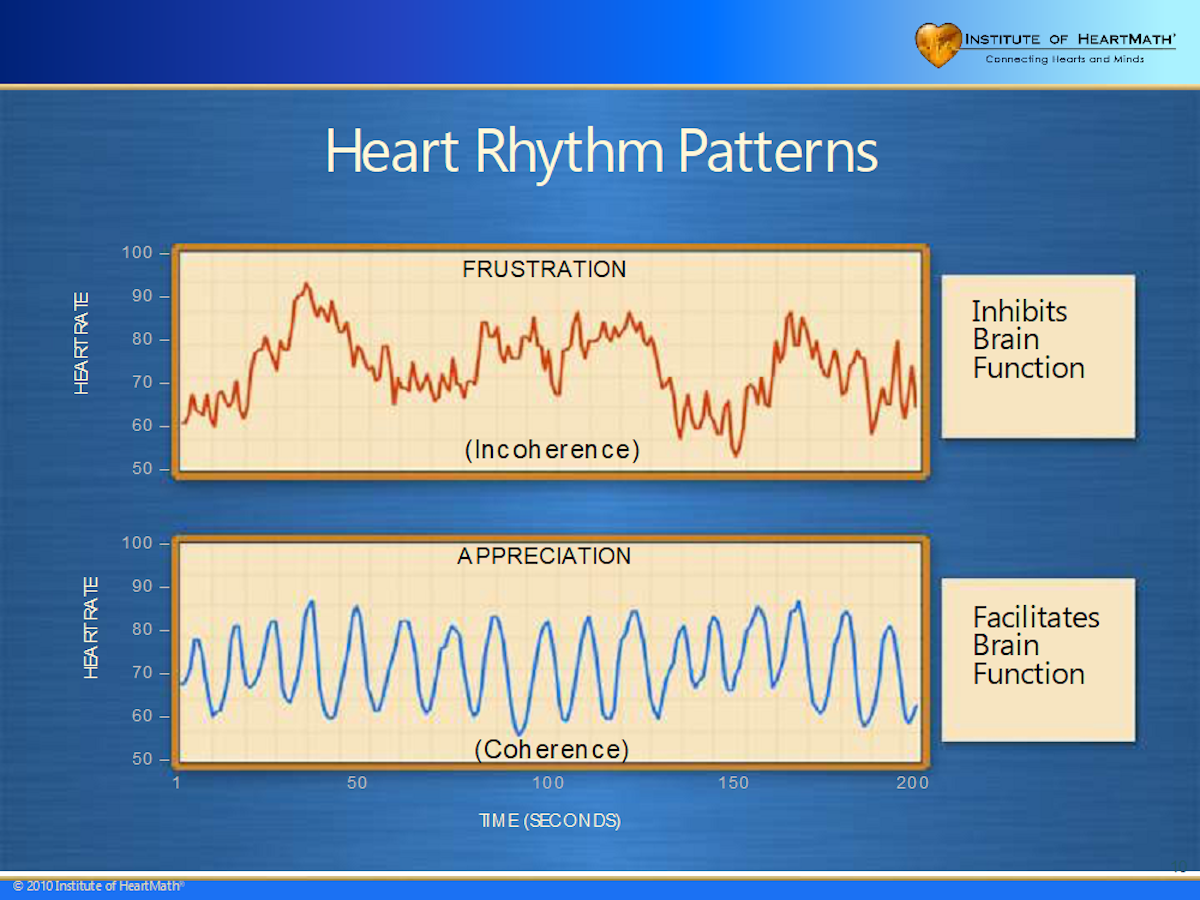 |
The Heart’s Harmony is a measurable and definable harmonic unique rhythm , a psychophysiological state of harmony. It creates a state in which the parasympathetic and sympathetic systems are in equal vibration and balance. Although it has a stress-reducing effect, this state should not be confused with relaxation or calmness. It is much more than that; it is a state of flow in which the mind, thoughts, and emotions become harmonious with the heart, accompanied by intuition, heightened perception, clarity, and understanding. This state is created by stable heart rhythm patterns formed by experiencing high positive emotional states such as love, compassion, appreciation, forgiveness, and gratitude (14,16).
The co-vibration created by the harmony of the heart generates an electromagnetic field 4.5-5 meters wide and sends signals to itself and to the morphogenetic field in which we are located, creating physical, mental, emotional health and well-being. This harmonious ‘information-structure’ field also interacts with the geomagnetic field of the entire world and the solar system, including the electromagnetic field of humans, plants, animals and nature (17).
 |
Heart’s intuition : We have all experienced moments in many different situations that life presents us with when, despite all the fear or anxieties produced by the mind, we feel the best solution or way deep in our hearts. There are many studies showing that the harmony of the heart created by the heart intelligence activated by focusing on the heart increases this intuition (14).
In the first study on this subject, initiated in 2004, subjects were shown 45 randomly selected photographs, 30 of which were calm and 15 of which could evoke intense negative emotions. During this time, sensors were placed to measure the activation of brainwaves using EEG (electroencephalogram), ERP (cortical evoked potentials), and the electrical activity of the heart using ECG (electrocardiogram) and heart rate variability (HRV-HRV). As a result of the experiment, it was observed that the heart and brain together reacted to the next randomly selected photograph 4.8 seconds in advance of the event. It was determined that the heart intuitively sensed the future event 1.5 seconds before the brain and sent signals that changed according to the emotional content of the photograph to the brain and from there to the whole body (17).
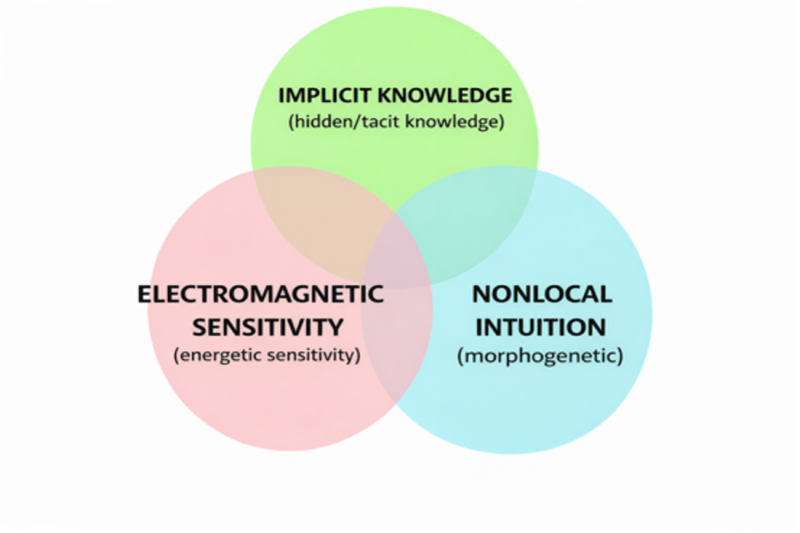
According to this study, the heart is seen as the first gateway to access the morphogenetic common information field, which is independent of time and space. In light of studies on the intuition of the heart , the Mathematics of the Heart team mentions the existence of three types of intuition (14).
- Implicit intuition (Knowledge): This refers to the existence of information that we previously learned through experience but have forgotten. This type of intuition is thought to be related to the brain and neuronal system.
- Electromagnetic interaction ( energetic) Sensitivity : This is thought to stem from the sensitivity of our nervous system to local geomagnetic fields. For example, sensitivity to environmental signals that allows humans or animals to sense earthquakes in advance.
- nonlocal intuition (Initiation ): A perception considered to belong to the intuitive intelligence of the heart, independent of time and space. For example, a mother sensing that something is happening/will happen to her child miles away. It has entered all languages and is expressed in those cultures with expressions such as speaking from the heart, putting one’s heart into it, and following the direction shown by the heart with reason.
The tongue speaks, the ear listens.
The heart speaks, the universe listens.
Yunus Emre
The role and depth of the heart in our interconnectedness is explored in numerous discourses throughout our past and present culture, as well as in literary works.
“This much mixed mixed between Adam curve with the truth from each other so that it can separate Thus, the Creator , the mind He created . Alive and shiny One It was existence . It was Adam’s per He placed it . But one The meaning is knot. the one which… mind , itself with himself It was limited . He couldn’t grasp it . He refused . Upon this… He Who Keeps Hearts Firm, created the heart of Adam . to the left side of his chest He left . The heart, the mind. couldn’t get out to the heights It would come out . From the mind more alive more It was brilliant .
“La: The Syllable of Eternity,” Nazan Bekiroğlu
UNITY OF MIND AND HEART
“Change your hearts. You’ll find that things that seem like the truth to you change very quickly.
Can the heart change if one wishes? The world’s hardest and softest metal: the heart. Let him find his fire; he’ll change immediately…” Necip Fazıl Kısayürek
To bring both the brain and the entire body into alignment (resonate) and produce a mind with a heart. We can call this integration an ” intelligent heart “.
We generally acquire knowledge through our minds, creating our own synthesis within ourselves and learning. This is invaluable. However, it is not enough. For a wise heart, it is also necessary to accept and reinforce this knowledge with our hearts. Then we feel as if we have known it for years. What we learn is blended with the intuition of the heart , integrated with its wisdom. Within ourselves, we begin to see the connection and relationship of everything to everything else; the bigger picture. Only after this stage of maturation do we discover deeper meanings in knowledge. We begin to be nourished from within, not from without. Our knowledge and experiences become a state within us, becoming part of our wholeness. And in that state of wholeness, our connection with each other and with the WHOLE becomes more palpable.
Doç. Dr. Fatmagül YILMAZ ÇINAR, 2023
SOURCES:
The general archives of the Wisdom Sun Association (BGD) and the Humanity Sun Foundation (İGV), as well as the Wisdom School, especially the notes of the workshop ‘The Future of Consciousness – Consciousness of the Future’ and ‘The Measure of Eternity; HUMAN’ are used as a resource for this article.
- Is Understanding the Brain Possible Only Through Neuroscience? – Prof. Dr. Tayfun Uzbay . ÜÜ Social Sciences Journal, 2015, pp: 119-155.
- The Developing Mind : How relations and brain interact to shape who we are ? – Daniel J. Siegel , MD
- of Human Relationships – Prof. Louis Cozolino.
- Pocket Guide to Interpersonal Neurobiology – Daniel J. Siegel , MD.
- New Science: Connectivity New Culture: Coexistence – Prof. Dr. Türker Kılıç.
- Social Intelligence: The New Science of Human Relationships – Daniel Goleman. Pages : 86, 87.
- The Path of Light – Nilüfer Devecigil
- Mindsight – Daniel J. Siegel , MD
- The brain keeps records. Bessel A. Van Der Kolk , pp: 55-64.
- Human Factory Settings (IFA): Relationships and Stress – Sinan Canan, pp . 158-167.
- Accessing the Healing Power of the Vagus Nerve – Stanley Rosenberg
- Polyvagal Theory – Dr. Stephen Porges , pp:6-7, 58-59.
- The secret to a long life: The vagus nerve. Esra Nur Gökçe, Zehra Pınar Cengiz, Oytun Erbaş. FNG & Bilim Tıp Dergisi 2018;4(3):154-165.
- Science of The Heart – Rollin McCraty , Mike Atkinson, Dana Tomasino
- Love 2.0 – Creating happiness and health in moments of connection – Barbara L. Fredrichson .
- Heart Intelligence – Doc Cildre , Howard Martin , Deborah Rozman , Rollin McCraty .
- The Science of Interconnectivity : Exploring the Human Earth Connection. Rollin’ McCraty , Annette Deyhle .
- Electrophysiological Evidence of Intuition : Part 1. The Surprising Role of the Heart . Rollin McCraty et al. The Journal of Alternative and Complementary Medicine March 2004, 10(1):133-43.
- The Purified Being: HUMAN. (2023) The Sun of Humanity Foundation.