
Our ways of thinking, perceiving, and even the beliefs we hold about ourselves, humanity, and existence are deeply influenced by the narratives. With time, these narratives become so ingrained that we start to reproduce them. Through these stories, we define who we are by attributing certain roles to ourselves. We make sense of life with these narratives; especially one main story. However, there is a growing sense today that this main story is beginning to disintegrate, and that the truths it once sustained are no longer persuasive. Increasingly, people acknowledge that this story no longer holds the same authority.
American author Charles Eisenstein, whose research and publications cover the history of human civilization, economics, spirituality, and ecology, describes the human being in this ancient story as an individual in a separate universe, among separate individuals; a mind separate from other minds; a soul in a body separate from the world and other souls, adding: “At the root of human nature lies the maximization of our own self-interest. As a result, individuals, institutions, and systems are in competition; therefore, to protect ourselves, we need to control as much as possible. We pursue everything that will enable us to achieve this goal, such as money, status, security, information—everything we define as power and security.”
According to Eisenstein, in this story, we, as both genetic and cultural transmitters of knowledge, are a special, even superior, species, beings who have completed their evolution. From a religious perspective, we are the only living things with a soul; from a scientific perspective, we are the only ones with a mind; only we possess the consciousness necessary to shape the world according to our own design. This is why we seek power. The better we use this power, the better position, the more comfortable, and the safer we will be in this universe full of rivals and enemies.
We’ve believed this story for so long that we’ve mistaken the realities it presents for “truth.” This story is built on a dualistic consciousness and a culture of competition. In this story, saying “less for you” means saying “more for me.” Therefore, to be safe and survive, we try to get ahead in the race, controlling many elements, including the forces of nature. Because we see ourselves as separate from others, we want to control everything and everyone we define as “the other.”
This narrative certainly made claims about the future. But none of this came to live. The social structure that the old story claimed have not formed. Promises and expectations have not been met. Moreover, things got even more complicated; it led to consequences that threatened existing systems and our understanding of civilization. The ecological problems threatening our world became increasingly serious, and societies became increasingly polarized.
In these times we have been living through for some time now, we see that existing patterns of thought and modes of action are neither meaningful nor valid. We understand that narratives of past has come to an end. Indeed, today we see that competition, duality, and division have reached unimaginable extremes. Because any system, if it understands that it has come to an end, struggles and tries to maintain its existence. The invasions, environmental problems, and many other things experienced in the last century clearly demonstrate the struggle that the current story is waging to avoid ending. The answers given to the fundamental questions of life, and the culture and system built upon these answers, are on the verge of collapse. Our entire civilization is changing. Realizing that the answers we know are no longer valid, that the system we know is collapsing, undoubtedly causes anxiety and fear. But no matter what, this story is ending.
Humanity has begun to realize that the root cause of many of its problems stems from its current understanding of itself and life. The inadequacy of this old understanding and the cultural and social structures it created has become apparent and is being expressed by many groups, especially Generations Y and Z. Greta Thunberg loudly voices environmental concerns at international meetings, and Malala Yousafzai’s criticism of discrimination based on gender, race, origin, language, and religion resonates internationally. A demand for radical change and transformation is rising, particularly from young people. Perhaps the current crisis in society and the world is not an obstacle in our path, but rather an opportunity requiring a profound, fundamental transformation.
It is now abundantly clear that we need a “new,” and more importantly, a “real” human narrative. Some predictions and suggestions for this new narrative have already begun to emerge. However, none of them are yet widely accepted. Perhaps it will take some time for humanity to find “the new” meaning. Perhaps we are not yet fully ready for the new narrative. Because, on the difficult journey from where we are now to the new, both change and transformation are necessary. Almost everything needs to change and transform, both on a personal and collective level. We feel we are on the verge of a social, cultural, and spiritual leap in consciousness.
We believe that humanity is moving toward a new stage of consciousness and responsibility. A new story is emerging on the horizon. “New” signifies a transformation in the way we define life. Humanity’s role on planet Earth is changing. It’s taking us into an unknown realm, confronting us with an approach that requires openness to the new. Some motifs of this new story are beginning to appear. Today, we can see them in practices we call alternative, holistic, or ecological. For example, fairtrade, a market-oriented social movement advocating for fair compensation for producers and promoting sustainability; ecofriendly, a social organization supporting environmentally friendly products; good4trust, an online platform promoting ethical trade; memenomics, a search for a new economic model based on income inequality and the power of money; and the Venus Project, an industrial design project that aims to offer alternatives to all existing economic and political systems, starting with the slogan “redesigning a culture.”
It seems that the old narrative, based on separation, is giving way to a new one based on interconnectedness. This new narrative is beginning to develop answers to fundamental questions about life. Names like “The Age of Reunion,” “Coexistence,” and “Interconnected wholeness” are being given to this new narrative.
These names may be new, but in reality, the emphasis on the interconnectedness between the parts is not so new. There are clues we have looked for but haven’t seen, or haven’t understood, until now; in the universe, in our world, even in our bodies…
 |
 |
There is a wealth of ancient knowledge that tells us that everything is interconnected and exists in a harmonious whole, like the golden ratio . The golden ratio is a geometric and numerical ratio observed in mathematics and art between the parts of a whole, considered to yield the most aesthetically pleasing dimensions in terms of harmony . The double helix structure of DNA… and at its core , gold ratio It is located. Each full turn is 34 angstroms long. and its spiral structure with a width of 21 angstroms with gold rate within It contains the number 34/21 = 1,619. So … it’s the same in the human body . ratio It exists , in our fingers , in sunflowers , daisies , and the sea. in their shells …
 |
The golden ratio has also been frequently used in art and architecture. During the Renaissance period … famous painters Leonardo Da Vinci, Raphael, Botticelli in his works gold rate They used it . Architect Sinan’s wonderful works Selimiye And Süleymaniye in the mosque gold ratio self It shows.
 |
Connectivity It is also hidden in geometry . The word geometry translates as the measurement of the world or earthly measurements. Geometry reveals the inseparable relationship of the part to the whole, a structure that permeates all forms. Geometry, which constitutes the original design scheme, the sacred foundation, of everything that exists, is a constant reminder of our relationship with the whole, proof of the interconnectedness in the universe and the continuous interaction of everything with everything else through invisible networks.
“There exist a very common geometry in the universe. From universe to smallest particle of matter, everything is under violent effect of this common geometry. All branches of science follow the rules of this common geometry. This natural geometry exist everywhere. Where there is matter, there is geometry.” Johannes Kepler
Archetypes embedded in the collective unconscious emerge through frequencies and geometry. These are the numbers and letters of the subatomic world. Frequencies are vibrations per second. In the matrix that forms the fabric of the universe, frequencies are expressed as numbers; numbers correspond to shapes, which create patterns. Patterns have a fractal structure, meaning that the smallest part contains the information of the largest part, and the largest contains the information of the smallest. These structures serve as templates in the formation of material forms within the infinitely expanding flow of life energy.
“Geometry is the knowledge of what is eternal.” – Pythagoras
According to esoteric knowledge, the physical universe is created according to a geometric plan. Indeed, all essential truth maintains this connection by constantly transforming into geometric forms. Sacred geometry is a field of study that examines the geometry observed in the structure of the subatomic plane, including all its forms and principles. Before a form emerges, the self-knowledge that gives it life is reflected as frequencies and patterns. Therefore, geometry is not merely a measure existing outside of our being; it is a fundamental tool of consciousness present in all processes of creation’s transformation into matter.
In nature, we encounter geometric patterns, designs, and forms everywhere, from the smallest particles to the expressions of life perceptible to the human eye and to the microcosm. For example, the chambered seashell nautilus grows at a constant rate and forms a logarithmic spiral to accommodate this growth without changing shape. Similarly, honeybees create hexagonal cells to hold their honey. Geometry is at the heart of both biological and cosmic order. Geometry has served to carry pure knowledge about the truths of creation unspoiled to the present day; from the archaic period to the Middle Ages and from there to the present, plans, drawings, and decorations based on sacred geometry have been created in architecture and art.
 |
The Flower of Life pattern is one of the most basic geometric shapes. It consists of numerous concentric circles of equal area and a larger circle outside. Found in various temples and structures across the globe, this symbol is said to have the same name everywhere. It is known for its pure form and proportion.
The Flower of Life symbolizes creation and the unity of all things. It is a geometric expression of how consciousness creates physical reality. It is believed that the entire code and origin of the universe and life are hidden in this symbol. The Flower of Life is a two-dimensional representation of the torus. The torus, defined as a three-dimensional symmetrical structure, manifests itself in the distribution of electromagnetic fields surrounding all living and non-living things.
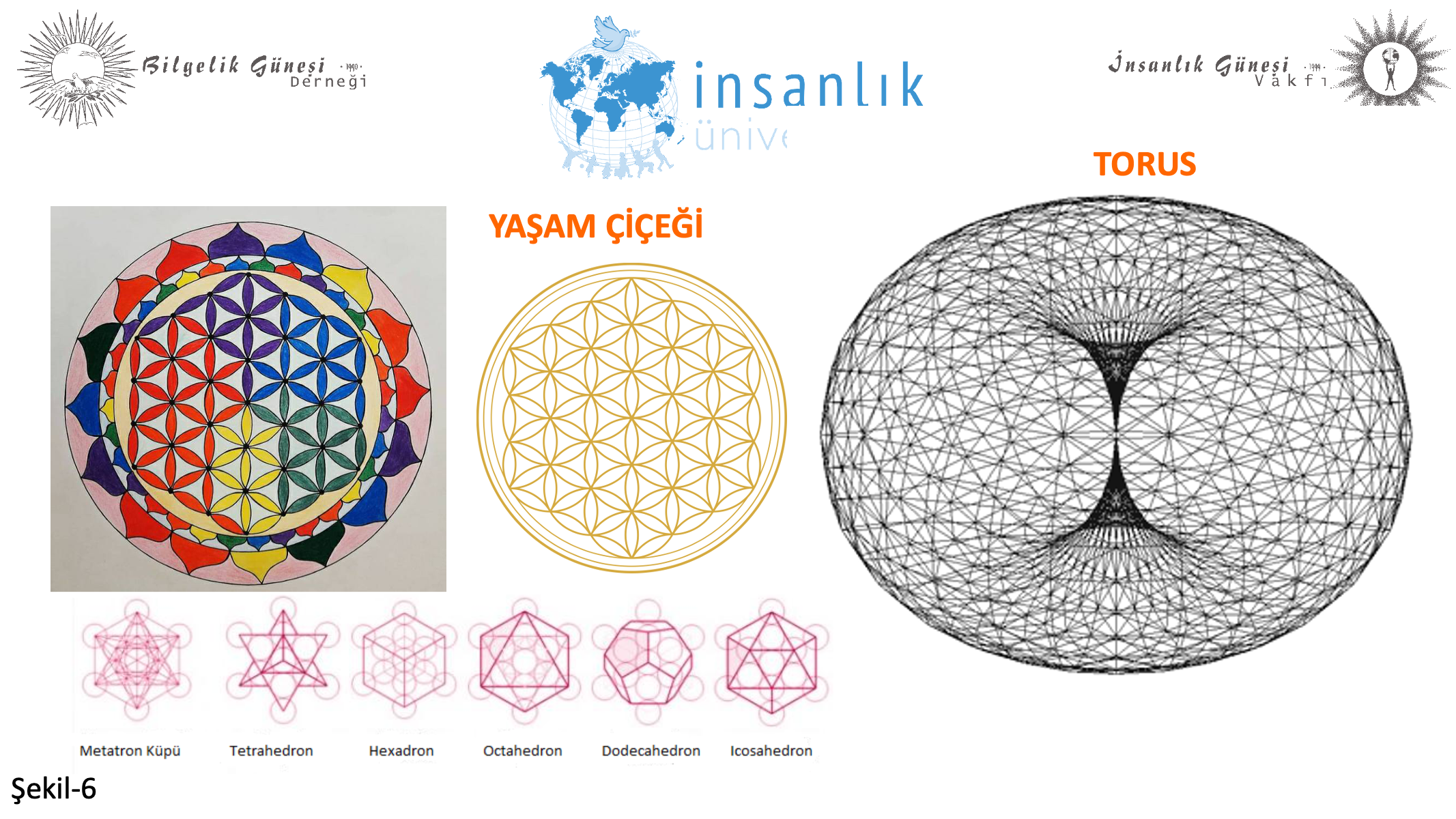 |
As the Earth rotates, layers of varying densities create an electromagnetic field around it in a torus shape. This field, much like a cloud, protects living beings from all harmful cosmic rays coming from outside the Earth. Ecological balance, or in other words, life itself, depends on it.
the torus pattern formed by the rotation of planets, the solar system, and atoms also exists magnetically in the human body. The detection of the high magnetic field carried by the heart is considered important evidence in explaining the torus magnetism around the body.
Rollin McCraty and Annette Deyhle states that it has long been known that humans are affected by fluctuations in the magnetic fields of the Earth and the Sun. Historically, many cultures also believed that their collective behavior could be influenced by the sun and other external cycles. The first scientific evidence for this belief was provided by the Russian scientist Alexander Tchijevsky, who noticed the more intense conflicts of World War I. The following graphs, created from Tchijevsky’s original data comparing global human history from 1749 to 1926 with solar cycles, show the comparison of significant human events with the solar cycle.
 |
Solar activity has been associated not only with social unrest, but also with periods of great human development, including bursts of innovation and creativity in architecture, art, and science, and periods of positive social change.
Recent experiments have shown that individuals’ magnetic fields also influence each other. Russek and Schwartz demonstrated that cardiac energy and information can be exchanged between individuals through these fields.
Theoretical physics professors Larissa Brizhika and Emilio Del Giudicede state : “An electromagnetic field acts like a messenger that can contain numerous molecular components, thus affecting a macroscopic entity and interacting with all molecules within its wavelength.” This means that magnetic fields are carriers of biological information that connect all living systems.
As an extension of this hypothesis, the idea arises that we are not only biologically receivers of information, but also capable of feeding the “global information field.” The concept of the noosphere was first introduced by Vladimir Vernadsky of the Ukrainian National Academy of Sciences, but the term noosphere was coined by the French philosopher and geologist Pierre Teilhard de Chardin. Teilhard perceived that the complex structure existing in space and time is constantly expanding and that there is continuous growth in the evolution of consciousness. He named this the noosphere and proposed the thesis that as the collective consciousness of humanity develops, the noosphere surrounding the world could also expand beyond the world, into the universe.
The noosphere is a totality formed by the accumulated thought, ideas, and culture of all humanity. Or, in other words, a field of thought surrounding the world where interaction between human minds takes place. As Jung said in the context of the “collective unconscious,” all consciousnesses are interconnected in a universe where everything is infinitely interconnected.
 |
Interconnected wholeness is finding its place in science today; many new developments are emerging and causing a significant paradigm shift with scientific approaches that demonstrate our interconnectedness. These new developments in science are extremely important in determining our behavior as social, economic, and political beings. These developments are not only interesting, but will also serve to renew and refresh culture.
The first of these changes is the collapse of the Neo-Darwinian approach, which held that DNA sequences, which we call genes, evolve through random mutation and natural selection, and that these genes program living organisms to maximize their reproductive interests. It is now known that this view is valid in a very narrow field, that macroevolution occurs not through random mutation but through symbiotic association, acquisition of external DNA sequences, and the cutting, fragmentation, and reassembly of the organism’s own DNA, and that cellular and epigenetic inheritance can also be effective.
The absence of a genetically self-serving, self-serving entity undermines the primary foundation of the old narrative. The boundaries of the genetic self are fluid. This self arises from a constant exchange of DNA with other organisms and its environment. Of course, the self has boundaries; however, these boundaries are changeable, and so is the self within those boundaries.
Furthermore, the science of ecology shows us that species evolved not only to serve their own genetic interests but also to meet the needs of other species and the whole. Science shows that if a species becomes extinct… the fragility of the entire ecosystem It has only recently become clear that the wolves’ numbers have increased . The disappearance of a competitor is not in the interest of other species. The presence of one species affects and supports all others. What happened in Yellowstone National Park is the best example of this. After years, the return of wolves to the park led to an increase in the number of songbirds, migratory birds, beavers, and also rabbits and mice. This meant more hawks, more weasels, more foxes, more badgers. But most surprisingly, the presence of wolves changed the behavior of the rivers. The rivers began to meander less, there was less erosion. Channels narrowed, and more pools and dunes formed. Similarly, in some areas, the deer were driven away and vegetation regenerated on the valley slopes, further reducing erosion because the vegetation was now more stable. Thus, despite their small numbers, wolves not only transformed the ecosystem of Yellowstone National Park but also changed the physical geography of the area.
 |
In the quantum world, photons or electrons do not behave according to the totality of forces applied to them. Photon A can pass through the slit and arrive here; photon B arrives there. Why? If a force is not pulling it, why does one photon go this way and another that way? Or why does it sometimes behave as a wave and sometimes as a particle? Some schools of physics call this behavior randomness. These schools try to preserve determinism, that is, certainty. Why do you do one thing and not another when a force is not pulling you? Because you make a choice. Therefore, the answer is that the photon also chooses its path. Accepting that a photon or electron can make decisions, can make choices, requires accepting that our universe has intelligence.
This new paradigm has manifested itself in neuroscience as interconnected wholeness. Interconnected wholeness, which gained momentum after 2015, is less a paradigm shift in the field of science and more a renewal of the scientific method, as evidenced by the research in neuroscience.
Just as the culture we live in has been nourished by Plato, Aristotle, Hacı Bektaşi Veli, Mevlana, Yunus Emre, Ibn Sina, and many other scientists and philosophers, interconnected wholeness is also a new scientific method built upon the deductive and inductive methods that have scientifically shaped our present civilization.
In deductive reasoning, concepts are important, while inductive reasoning, a concept proposes a hypothesis and subjects that hypothesis to a sufficient number of experiments concerning the building blocks that make up the whole. This means that when we cannot understand the whole itself, we examine its smallest representative parts to identify its building blocks, and then conduct experiments on those building blocks. This smallest part is a neuron for the brain and an atom for the universe. The data obtained is then applied to the whole. In this way, we gain knowledge about the whole.
Neurosurgeon Prof. Dr. Türker KILIÇ , relational integrity is the totality of network structures that form a whole, and the information relationships where each whole is a part of a larger whole. In other words, information underlies all part-whole relationships. In this new method, the focus is not on the parts themselves, but on the relationships between the parts and the whole—that is, their connectivity. The fundamental element in this connection between parts is the information that operates within that connectivity. Science has shifted its focus from the particles that make up the whole to the connections between the particles that make up the whole. Therefore, to understand the brain, it is necessary to examine not the neurons themselves, but the connections between neurons. This connectivity is a system that generates information.
 |
Connectivity studies begin by investigating how information-processing systems generate their own intelligence. The brain is considered the most sophisticated example of this. However, unlike the old method, it is understood that it is important to look not at the points (neurons) themselves, but at the connections between the points (neurons) and the whole. To demonstrate this scientifically, they first consider whether a computer model could be developed to examine the connections between neurons. Then they realize that what is needed is not computer modeling, but a new kind of mathematics. Indeed, the existing mathematics is the mathematics of statics, meaning it only examines points. During this time, a new mathematics ( Bayesian mathematics) called probability and predictive mathematics is developed, and with this, up to a certain extent (38,000) neuronal connections are examined. From that moment on, the causality behind what was previously called randomness becomes visible, and it is understood that it is not a chaotic structure.
Interconnected wholeness has the potential to transform not just a specific field of science, but the entire scientific understanding. In fact, this development triggers a transformation of our perception of existence, the shared mental framework in which we live, and our culture; it affects many areas, from economics and education to law and health. Interconnected wholeness is described as a new system of thought, a model of life, in other words, a new mental framework.
Indeed, according to Prof. Dr. Türker KILIÇ, with the emergence of the concept of interconnected wholeness, curiosity and intelligence are replaced by a sense of goodness, and diligence is replaced by creativity. Creativity is defined as reshaping the existing knowledge network and presenting it in a form that has never existed before, creating a new whole from existing parts.
Especially if this new paradigm brings a whole new way of understanding, a new perspective; if it brings with it a new way of looking at life, a re-evaluation of ourselves, those around us, society, and our world…
Interconnected wholeness not only opens up a new perspective on how the brain creates the mind, but also answers the question of what life is in certain areas. At every moment of life, the brain creates a new information field—a model of reality—that has never been experienced before and will never be experienced again.
Indeed, we learn that the instantaneous informational connections of just 300 neurons within the prefrontal cortex can produce information patterns unlike anything seen at any other point in life.
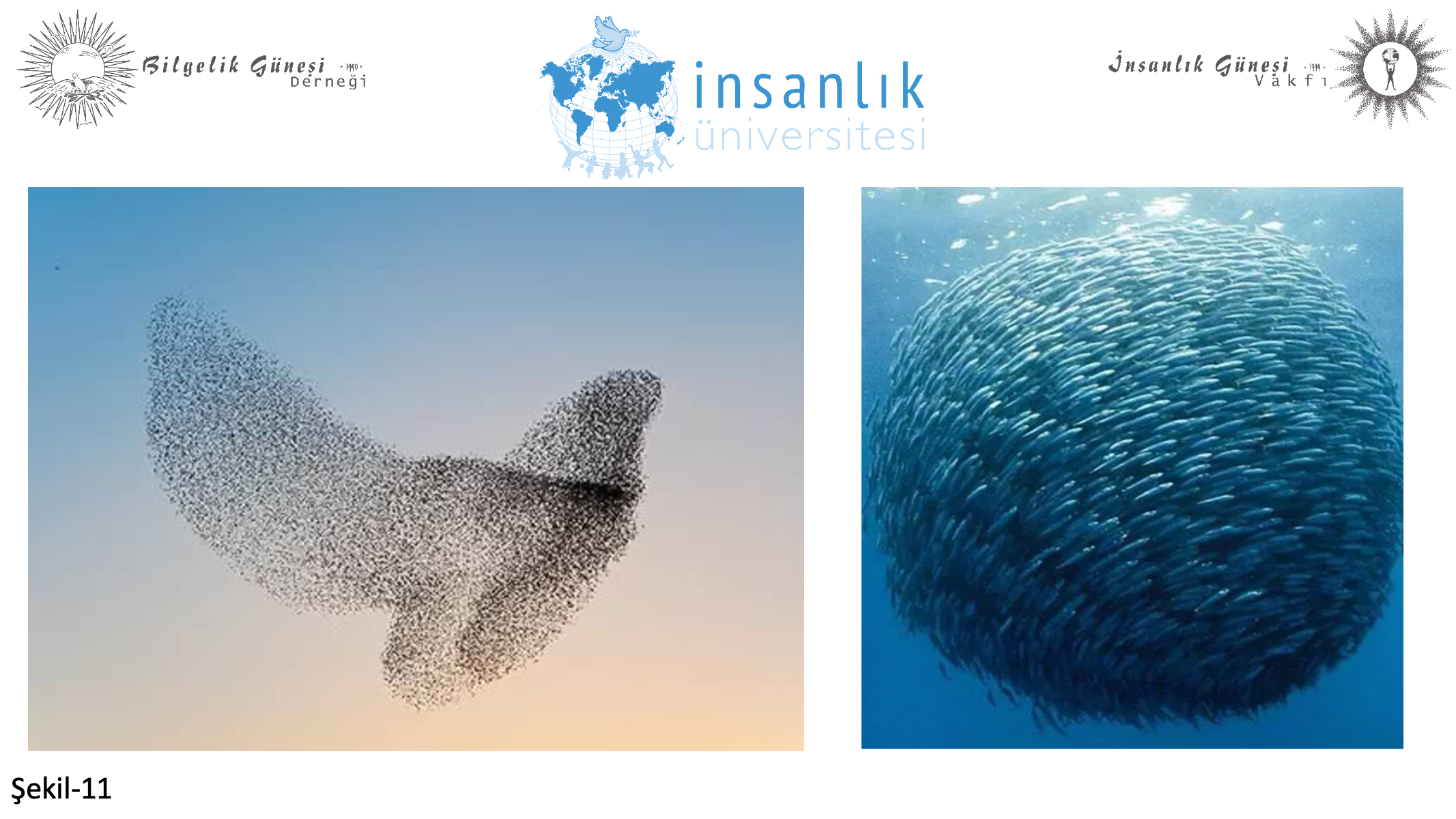 |
Many groups of animals that move in clusters exhibit the same enigmatic ability to move together. Take flocks of birds and fish, for example. Biologist Iain Couzin and oceanographer Nicholas Makris say that fish exhibit a threshold response, changing their course when a sufficiently large number of them shift direction, especially in the presence of a predator or potential food source. Moreover, they do so at a speed ten times faster than the swimming speed of any single individual. “Incredibly well-orchestrated,” says Couzin.
Couzin also found this interconnected wholeness model in the nests of certain ant species. Approximately every 20 minutes, activity begins near the center of the nest and spreads outwards through the connections between individuals. Couzin likened this process to brainwaves. The activity— whether it’s carrying a leaf or consolidating a memory—the process is the same.
While there are differing views on how these swarms form their connectivity, the most widely accepted theory has been the “morphic field theory.” Morphic fields are one of the concepts that new science uses when trying to explain relational totality.
The term “morphic” can be summarized as the shared characteristics of a species, including its external appearance, genetic structure, and behavioral patterns. A “morphic field,” on the other hand, is defined as a conscious “shared field” that exists between beings of the same species and frequency, perhaps even those who have never met, transcending space and time, and influencing each other. This field constitutes the group’s collective, shared memory. The influence of this field is enriched and strengthened by each member of the group, and each member becomes connected to this “shared memory.”
 |
Thanks to the unconscious realm, which Jung called the unconscious, and the morphic realm, which Sheldrake called the collective memory area, we are able to cope instinctively with the complex order of life, organize everything, and act in accordance with the shared legacy of the past.
The process by which earlier systems influence later ones occurs through “resonance.” Morphic resonance not only alters genetic structure but also causes changes in the behavior of a species at a critical point. When the number of individuals adopting a new behavioral pattern within a species reaches a critical level, all members of the species, even if they have never met each other, change their behavior. In other words, everything is organized by a holistic, invisible, and undetectable field, in addition to the known energy and matter. An example of this is Ken Keyes Jr.’s “100th Monkey Experiment.”
macaques living on islands of varying sizes in the Pacific Ocean were used. Sweet potatoes are left in the sand for Fuscata monkeys. After a while, the young monkeys learn to wash their sandy sweet potatoes. This healthier and more enjoyable new behavior is also adopted by the adult monkeys, who learn something new by imitating their offspring. Then something very surprising happens. Some of the monkeys on one of the islands (let’s say 99 monkeys) have now learned to wash their potatoes in water before eating them. One morning, at sunrise, the hundredth monkey joins those washing their potatoes. That’s when everything changes. By the evening of the same day, almost all the monkeys on the island begin washing their potatoes before eating them. For some reason, the added energy of the hundredth monkey creates a revolution. But the story doesn’t end there. The real surprise that baffled the scientists was that monkey colonies on other islands, which had no direct connection to this island, also simultaneously began washing their potatoes… Once a new way of thinking and behaving is adopted by a certain percentage of the individuals making up a society, this innovation can be transmitted from mind to mind, regardless of distance.
The “morphic-shared field” is not unique to the entities we perceive as living; all things in the universe, living and non-living (animals, crystals, stones, etc.), interact within their own “shared-morphic fields.”
” The Intention Experiment ” describes an experiment where two elephant ear plants, located in different rooms, are connected to a device capable of making precise measurements. A leaf is cut from one plant, and the electromagnetic changes in that plant are observed. The plant in the other room is left untouched, yet the same electromagnetic changes are observed in it. The experiments are repeated in different ways, and each time, a communication between the two plants is observed.
Whether we are aware of it or not , extraordinary connections are constantly forming at the subatomic level, and only a very small fraction of these are perceptible to us. The world we perceive, our entire consciousness, our past knowledge, and our present perception are merely a showcase. Beneath our being lives a universal, timeless, and spaceless holistic memory.
Quantum physics is the science that delves into the subatomic world, discovering that reality there is vastly different from our own perception. It reveals that there are no independent, separate objects in the universe, demonstrating that everything is interconnected and identical. In the quantum realm, nothing is separate or disconnected.
According to the “nonlocality” concept in quantum physics, the subatomic particles that make up the physical universe are in communication with each other and remain energetically connected regardless of the distance between them.
A subatomic particle in one part of the universe can communicate with a subatomic particle in another part of the universe, without being limited by time or space.
In his book “Wholeness and Closed Order,” David Bohm, in response to the question “How can two particles be connected and behave as part of a whole even when separated by light-years?”, put forward the hypothesis that “subatomic particles are actually systems with extremely complex internal structures and essentially act as amplifiers of information contained in a quantum wave.” Later, Bohm suggested that the electron sea is alive, that wholeness is not static, but rather consists of a dynamic process that binds everything together.
Bohm began to consider that “order” is a relative concept, suggesting that systems that appear disordered to us may actually possess their own order. As a result, he developed a new and controversial theory of the universe. He proposed that reality constitutes a deep, hidden “secret” order belonging to a profound, indivisible totality, and he called this deeper form of reality the “Hidden Order.” What we perceive in the world as the ‘overt order’ is nothing more than the surface of the ‘hidden order’ that reveals itself as it unfolds.
The Implicit Order theory encompasses an ultra-holistic view; according to the “Implicit Order,” everything in the universe is interconnected, and any element can provide information about another. The “Explicit Order,” on the other hand, represents the perceptible world of reality that we see around us.
” Earthly” reality is visible ” That is one aspect . But there is also a hidden, concealed aspect.” Mualla S. Güven
In an open order, everything exists in its own space-time domain and is separate from the space-time domains of other things; in an open order, nothing is folded or intertwined with anything else. In a hidden order, everything is folded and intertwined with everything else. A hologram is a good example of a hidden order.
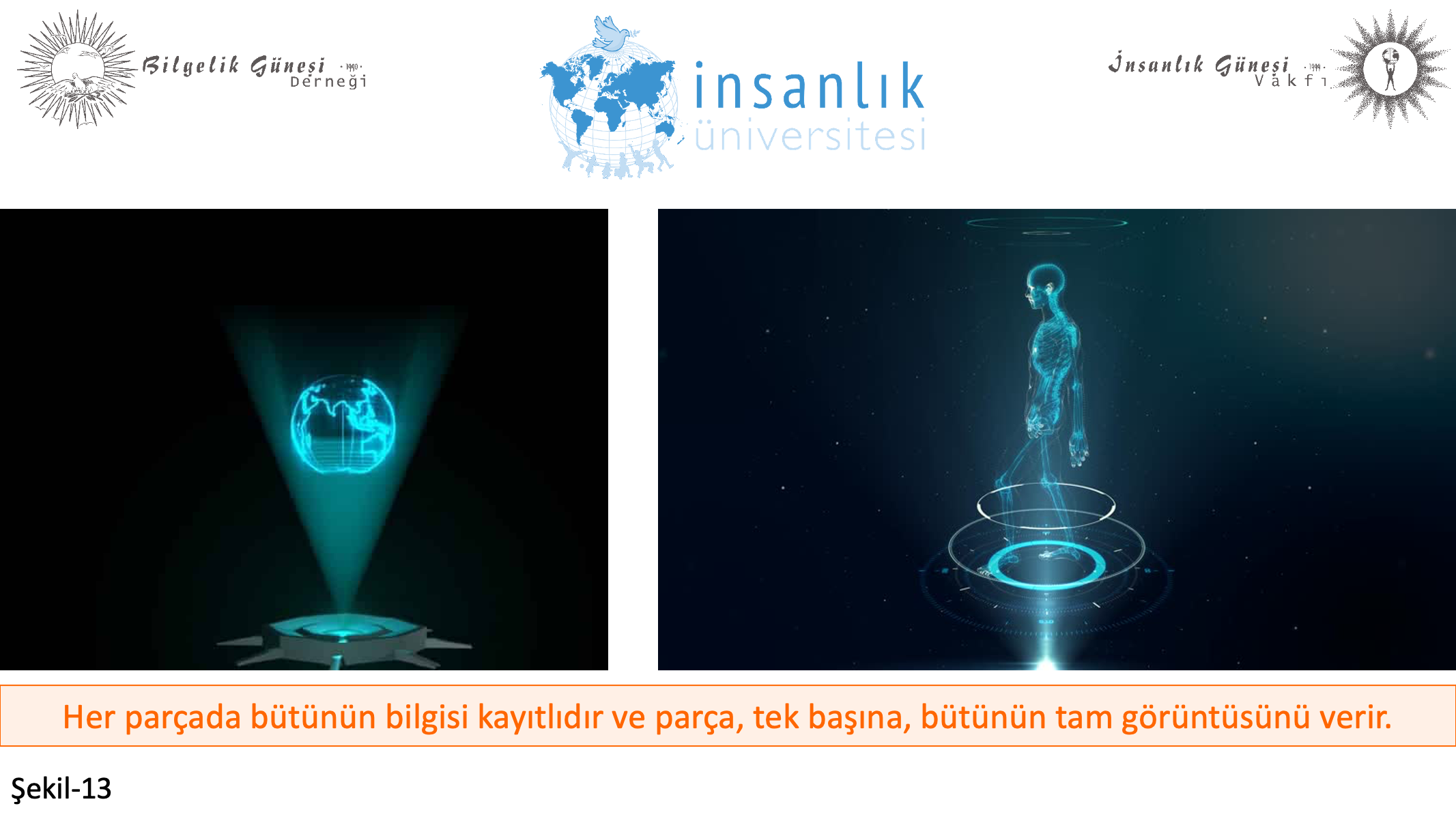 |
Holography can be described as a “system for recording three-dimensional information using laser beams.” Information about the existence of an object in space usually reaches us in the form of sound or light waves. Holography is a technique that allows the information in the waves coming from objects to be stored in a specific way and retrieved without any loss of information.
Hologram theory posits that all existing things are parts of the same whole, therefore their essences are one and identical, each unit carries within itself the knowledge of the whole, and if appropriate development is achieved, it can reflect the complete image of the whole.
In a hologram, each part, no matter how small, carries information about the whole object. All this not only suggests a connection between parts and the whole, but also redefines humanity’s role in the world. Copernicus and Galileo demonstrated that the Earth is not the center of the universe. These paradigm shifts, however, place not humanity, but the interconnectedness of all living things at the center. Thus, humanity, which in the old narrative played a central, dominant role, now embarks on a quest to understand the whole and to make that wholeness tangible.
Just as we have learned to accept the scientific insight that Earth is not the center of the universe, it seems now is time to embrace the fact that we are not outside of or above nature, but coexist with it…
As an example, permaculture is the harmonious integration of the land and the people living on it, sustainably meeting their needs for food, energy, shelter, and other material and spiritual requirements. The philosophy behind permaculture is to work with nature, not against it; to make careful long-term observations rather than focusing on short-term solutions; to look at systems in their entirety, rather than pursuing only a single product; and to allow systems to evolve on their own. The ethical principles of permaculture are listed as follows : Care for the earth , care for people, limit consumption.
Interconnected wholeness, supported by science and an expression of ancient wisdom, is also fostering a major transformation in social structures.
Relational integrity manifests itself at the social level through the constantly evolving concept of “restorative justice.” Restorative justice has found application in nearly a hundred countries. Although initially adopted to protect children who commit crimes from the negative effects of criminal proceedings, it has later become a system used not only for children but also for adults. Considered a new understanding rooted in an old idea, restorative justice places paramount importance on both protecting the victim and reintegrating the perpetrator into society. In other words, the aim of restorative justice is to remedy the injustice suffered by the victim and society due to the crime, and to enable the perpetrator to live a lawful life in the aftermath.
Now let’s examine how interconnected wholeness defines an individual’s existence and answers the question, “Who am I?” This is where the concept of co-existence emerges .
I’m not even sure if I exist.
I am all the writers that I have read, all the people that I have met,
all the women that I have loved; all the cities I have visited”
Jorge Luis Borges
Coexistence – and interconnected wholeness – are very natural terms. They point to something different and more than interdependence or the connection between entities.
Interconnected wholeness is an understanding that expresses that we are the relationship itself, that bond, that mortar. My existence includes your existence. My well-being, my goodness, is connected to your well-being, or the well-being of a river, a forest, an ocean, and other people. Because I am not separate from the other, from you.
You are love, I am a lover; without you, I would not be.
You are a rose, I am a nightingale ; without you, I would not be.
Aşık Veysel
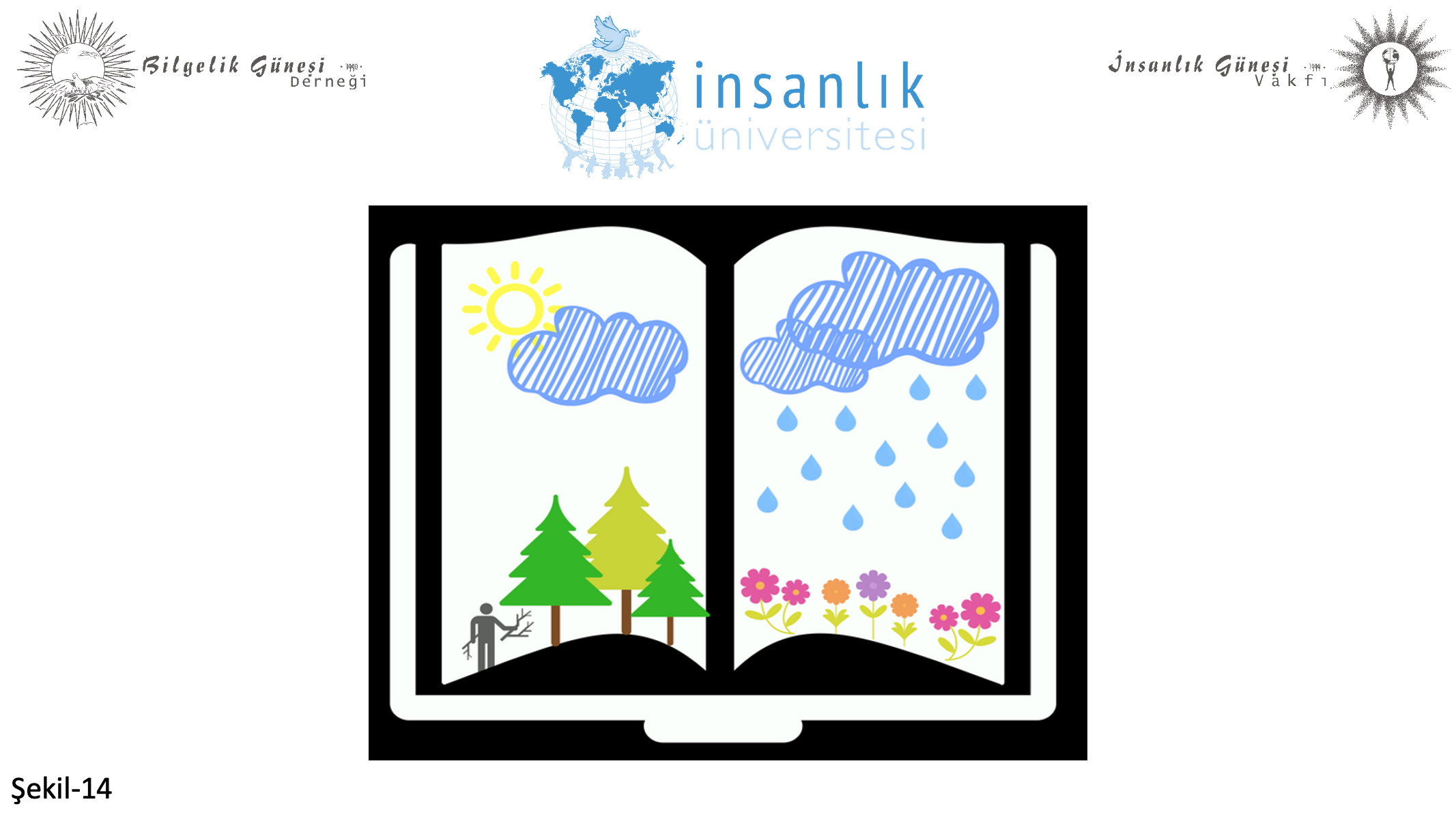
“Interbeing” is a concept first used by the Vietnamese Buddhist monk, Thich Nhat Hanh. He says: “If you are a poet, you clearly see a cloud floating within a piece of paper. Without clouds, there is no rain; without rain, trees cannot grow; without trees, there is no paper. The cloud is necessary for the paper to exist. If the cloud is not here, the piece of paper cannot be here either. Therefore, we can say that the cloud and the paper coexist. So does everything else. BEING” is “INTERBEING”…
 |
It appears that “we” are not a single life form— that is, a single self—but many. Current estimates suggest that our physical selves comprise approximately one trillion human cells and about 10 trillion bacterial cells. In other words, at any given moment, about 90% of our bodies are not human and house far more life forms than the number of humans currently living on Earth.
To see ourselves not as isolated, but as interconnected – we are more than we are told.
“ Humanity as a whole should be considered as one body and a nation as one of its organs. From the pain at the tip of a body’s finger all other organs are affected…” Mustafa Kemal Atatürk
We cannot keep violence or poverty outside our homes or countries. One day it will find us again. Even if we close the doors, it will happen to us in our inner world. Indeed, we see it happening. This is not because we cannot control life enough, but because it is inevitable. What happens to the world also happens to the individual. Because in reality, the individual, society, and the world are not separate from each other.
To live in this new narrative, we don’t need to turn our backs on a world mired in separation. We will live this narrative not with a desire to attain non-judgmental, forgiving, and similar virtues, but with an awareness of wholeness. The most fundamental assumption of this new narrative is that we are not separate from the universe and that our existence has a share in the existence of everyone and everything.
“Everything we see or don’t see, everything we understand or don’t understand is a part of us. We are everything, and everything is us.” Mualla Sevim Güven
So, given all this information, what is our next step?
First and foremost, it’s about making room for the ‘new’. In this era where we experience both the old and the new, each of us is moving towards the Age of Reunion , towards the ‘ new’ . It’s natural that along this path, we will have doubts or contradictions alongside our intuitions. Are we making room for the ‘new’, for new horizons, encompassing these doubts, without excluding anything, but also without clinging to anything?
As the saying goes, “There are minds within minds, hearts within hearts,” can we create space for a new mind and a new heart? Can we, once again, relinquish our preconceived notions and ingrained habits? Because this isn’t a process that’s done once and for all; it’s a cyclical process.
It is quite significant that some groups call this period the “Age of Reunion.” This reunion may be with our own essence; perhaps with the totality we have known until now. But perhaps it is not. Perhaps new, entirely new meanings will open their doors to us. Perhaps there is a new wholeness we need to discover. Perhaps we need to let go of everything we have known until now . It is up to us not to confine new concepts to old folders, not to abandon one thing and immediately cling to another, to give ourselves time instead of immediately saying “I understand,” to make room for the true meaning of what we have learned, to be open to the idea of not knowing or the unknown, to be at peace with the unknown.
We are going through a period where our inner worlds , which we “create” individually, our lives and actions , which we “create” with our inner awareness , our cultural reality, which is our social dimension, and the system and social structure created by cultural reality are all changing and transforming as a whole.
At this point, another responsibility that falls upon us is to remember what it means to be HUMAN. To correctly assess society and its potential for change, in order to establish the right connections between its parts. But it doesn’t end there. We have a responsibility to transform the wholeness we awaken within ourselves into a holistic system and structure in which we can live; to transform the future into the present.
“Now is the time for action, not words. From now on, what we need is activity, movement and progress.”
Gazi Mustafa Kemal ATATÜRK , 1928
Özlem KAYA, 2024
SOURCE
The general archives of the Wisdom Sun Association (BGD) and the Humanity Sun Foundation (İGV), as well as the Wisdom School, especially the notes of the workshop ‘The Future of Consciousness – Consciousness of the Future’ and ‘The Measure of Eternity; HUMAN’ are used as a resource for this article.
- Beautiful World Our Hearts Know Is Possible, Charles Eisenstein (https://www.crisrieder.org/thejourney/wp-content/uploads/2020/05/The-More-Beautiful-World-Our-Hearts-Know-I-Charles-Eisenstein.pdf)
- New Science: Connectivity, New Culture: Coexistence – Prof. Dr. Türker Kılıç.
- The Science of Interconnectivity: Exploring the Human Earth Connection. Rollin McCraty, Annette Deyhle.
- The Purified Being: Human. (2023. The Sun of Humanity Foundation.
- Wholeness and the Implied Order by David Bohm: https://interdisciplinarystudies.org/docs/Vol13_1995/01_Vol_13_pp_1_23_Dabrowski.pdf
- https://evrimagaci.org/kurtlar-nehirleri-nasil-degistirdi-7650
- https://www.scienceandnonduality.com/article/david-bohm-implicate-order-and-holomovement
- https://fizikakademisi.com/2017/05/06/hologram-yoklugun-icinde-1ligin-varligi/
- https://www.researchgate.net/publication/222525342_The_role_of_electromagnetic_potentials_in_the_evolutionary_dynamics_of_ecosystems
- Larissa Brizhik , Emilio Del Giudice, Sven E. Jørgensen, Nadia Marchettini and EnzoTiezzie , “The role of electromagnetic potentials in the evolutionary dynamics of ecosystems”.
- https://blogs.scientificamerican.com/cross-check/scientific-heretic-rupert-sheldrake-on-morphic-fields-psychic-dogs-and-other-mysteries/